Best Budget Sim Racing Setup: Five Parts Under $700
The best budget sim racing setup is built from five parts: a Logitech G920 at $199.99, a Next Level Racing GTLite folding cockpit at $253.26 or a Wheel Stand Lite 2.0 at $179.00, and a 27 inch 1440p monitor at $169.99. The frame matters more than most beginners expect, because pedals that slide make every brake point different.
A budget sim racing setup comes down to five parts, and the surprise for most people is which one deserves the money. The wheel is obvious. The frame is the one that gets skipped, and it is the one that decides whether the wheel is worth having. The Next Level Racing GTLite at $253.26 is the pick here because it fixes the pedals and the seat relative to each other and still folds to roughly six inches deep, which is the version of the problem most beginners actually have: not enough money and not enough room. This page ranks the parts by improvement per dollar and names the three places budgets get wasted.
How is this different from the complete beginner build?
Deliberately, and it is worth being explicit so you land on the right page. The beginner sim racing setup is a single complete build list: a specific set of parts, in a specific order, with a running total of about $549 and nothing left to decide. It is for somebody buying a whole rig in one purchase.
This page is a parts roundup. It ranks the best budget option in each category, explains what each one fixes, and names the substitutions that make sense if you already own a screen, a chair or a wheel. It is for somebody buying one piece at a time, or working out which single upgrade to make next. If you want a shopping list, use the build. If you want to understand the choices, stay here.
Which five parts actually matter under $700?
The wheel, $199.99. The Logitech G920 at $199.99 puts a wheel, a force feedback motor and three pedals in one box. Nothing cheaper gives you both halves of the control problem, and force feedback is not a luxury feature: it is how the car tells you the front tyres are washing wide. PlayStation drivers want the mechanically identical Logitech G29 at $199.99 instead, because the G920 will not authenticate on Sony hardware.
The frame, $253.26. The Next Level Racing GTLite at $253.26 solves the two problems a desk clamp cannot: pedals that travel away from you under braking, and a seating position that changes every time you sit down. Both of those make your brake points unrepeatable, which is the thing actually limiting a beginner's lap times.
The stand alternative, $179.00. If you already have a chair you like, the Next Level Racing Wheel Stand Lite 2.0 at $179.00 fixes the pedals relative to the wheel for $74.26 less and folds smaller. It does not fix the seat, which is the compromise you are accepting.
The screen, $169.99. An Acer Nitro XV271U 27 inch 1440p 180 Hz panel at $169.99 close to your eyes beats a much larger television further away, because field of view is set by how much of your vision the screen fills rather than by the diagonal on the box. It also becomes the centre panel if you build triples later.
The upgrade to save for, $379.99. The MOZA R5 bundle at 5.5 Nm at $379.99 is not a budget pick, it is the reason to wait. On PC, $180 more than a G920 buys a complete direct drive wheel, rim and pedal set, and skips the step most beginners take within two years anyway.
The five budget parts that matter

Logitech G920 Racing Wheel and Pedals
Wheel and three pedals in one box, force feedback included. Nothing else at this price gives you both halves of the control problem.
Best for: The core of any budget build on Xbox or PC.
Check price
Next Level Racing GTLite Foldable Simulator Cockpit
Solves the two problems a desk clamp cannot: pedals that slide away under braking, and a rig that has to disappear when the room is needed for something else.
Best for: Small rooms and shared spaces.
Check price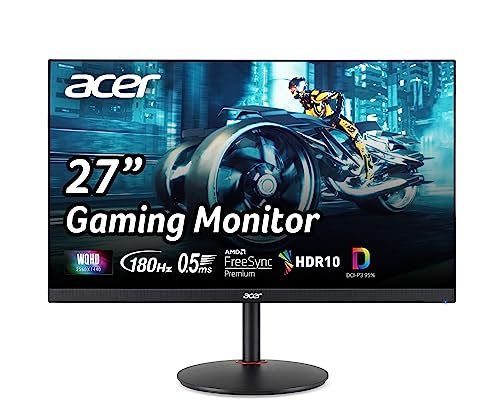
Acer Nitro XV271U 27 inch QHD 180 Hz Gaming Monitor
A high refresh 27 inch panel close to your eyes beats a larger TV further away, because field of view is set by how much of your vision the screen fills.
Best for: A budget build that can grow into triples later.
Check price
Next Level Racing Wheel Stand Lite 2.0
If you already have a chair you like, a wheel stand costs less than a cockpit, folds smaller, and keeps the pedals fixed relative to the wheel.
Best for: Drivers using an existing office or gaming chair.
Check price
MOZA R5 Bundle Kit Racing Simulator, 5.5 Nm Direct Drive
If your budget stretches by another $180 and you are on PC, skipping the gear-driven step entirely is the better spend. It is not a budget pick, it is the reason to wait.
Best for: PC drivers who can wait two months and buy once.
Check pricePrices change often, confirm on Amazon. As an Amazon Associate we earn from qualifying purchases.
The five parts compared
What each part fixes matters more than its specification, so that is the column to read first. The last column is what happens to the part when you eventually upgrade, which is the honest measure of whether a budget purchase was wasted or merely early.
| Part | Budget pick | What it fixes | Price | What happens to it later |
|---|---|---|---|---|
| The wheel | Logitech G920 | No force feedback and no pedals at all | $199.99 | Replaced by a direct drive base |
| The frame | Next Level Racing GTLite | Pedals sliding, seat geometry changing daily | $253.26 | Kept, or replaced by a fixed cockpit |
| The stand alternative | NLR Wheel Stand Lite 2.0 | Pedals sliding, if you already like your chair | $179.00 | Kept as a spare or sold on |
| The screen | Acer Nitro XV271U 27 in 1440p | A TV too far away to judge distance | $169.99 | Becomes the centre panel of triples |
| The upgrade to save for | MOZA R5 bundle, 5.5 Nm | Gear driven feedback, permanently | $379.99 | Kept for years |
A wheel and a stand is $378.99 and works. A wheel, a folding cockpit and a monitor is $623.24 and is a complete rig with nothing borrowed. Both fit under $700 without a single compromise that stops you racing, which is the useful definition of a budget build. Every line can be costed against your own substitutions with the sim racing build cost calculator.
Where does the money get wasted?
| The mistake | What it costs | What to do instead |
|---|---|---|
| A wheel with no force feedback | $119.95 | Wait for a $199.99 gear driven wheel |
| A large TV instead of a close monitor | $300 and up | A $169.99 27 inch panel at arm length |
| A shifter for cars that use paddles | $44.99 to $199.99 | Spend it on the frame first |
Buying a wheel with no force feedback. The Thrustmaster T80 at $119.95 has a vibration motor and 270 degrees of rotation. It makes an arcade racer more fun and it teaches nothing, because without a motor holding torque against your hands the car cannot communicate grip. This is the most common $119.95 mistake in the hobby, and the fix is to wait rather than to buy twice.
Racing on a television across the room. A 55 inch screen at three metres fills less of your vision than a 27 inch screen at 70 centimetres, and field of view is what lets you judge distance and rotation. A television also usually adds input lag and rarely exceeds 60 Hz for game input. The 27 inch 1440p panel above costs $169.99 and is the better instrument by a wide margin. The reasoning and the numbers are in the best sim racing monitor roundup.
Buying controls before buying a frame. A Logitech G Driving Force Shifter at $44.99 is only $44.99 and it is still the wrong first purchase, because modern GT and formula cars use paddles and because a shifter clamped next to a sliding pedal set solves nothing. The same is true of a PXN CB1 button box at $89.99, which answers a problem endurance racers have. Frame first, always, as set out in the first sim rig buying order.
Cockpit or wheel stand?
Both fix the same primary problem, which is pedals moving. The difference is the seat. A Wheel Stand Lite 2.0 at $179.00 assumes you bring a chair, and an office chair on castors rolls back a few centimetres every time you brake hard. You will not notice it happening, you will notice that your braking is inconsistent and blame yourself.
A GTLite at $253.26 fixes hips, pedals and wheel into one geometry, so the reference points you build survive to the next session. For $74.26 that is the better buy for most people, and the folding design means it stores against a wall rather than occupying a room. If you have space and want a step up in rigidity, the Playseat Challenge at $229.00 is cheaper still with a more relaxed position, and the Next Level Racing F-GT Lite at $299.99 converts between formula and GT positions. The whole category is compared in wheel stand versus full cockpit and ranked in the best sim racing cockpit roundup.
What can you reuse from what you already own?
A budget build gets cheaper fast if you audit the room before you open a shopping cart. The screen is the biggest saving: any 1080p or 1440p monitor you already own is fine to start with, and moving it closer to your face improves the picture more than replacing it would. Sit at your normal driving distance and check that the panel fills a wide part of your vision without you leaning forward. If it does, keep it and put the $169.99 elsewhere.
A chair is the second saving, and it is the one to take with care. An office chair works with a Wheel Stand Lite 2.0 at $179.00 if it does not roll, which usually means locking the castors, moving it onto a hard mat, or wedging it against a wall. A dining chair is often better than a gaming chair here, because it does not recline, does not roll and puts your hips at a sensible height relative to the pedals.
A gaming PC is the third. Sim titles are lighter than most modern shooters at 1440p, and a mid range card from the last few years will hold a locked frame rate on a single panel comfortably. Check your headroom against the PC requirements by sim title chart before assuming an upgrade is needed. What you should not reuse is a desk with a hollow core top: a clamp bearing on 6 mm of veneer over air is the most common mounting failure in a first build, and how to mount a wheel to a desk covers what to check before trusting one.
What should you upgrade first once the budget recovers?
Braking, and only after the frame is solid. A Logitech G RS load cell set at $159.99 replaces a travel based brake with a pressure based one, which is the change most directly connected to stopping in the same place every lap. It is close to useless on pedals that slide, because a load cell pushes back at whatever you are braced against, so buy it into a frame rather than before one.
After that the order is field of view, then feedback quality. Two more Acer Nitro panels at $169.99 and a MOUNTUP triple monitor stand at $66.48 build triples out of the screen you already own, though triple 1440p renders 11.06 megapixels per frame against 3.69 for one panel, so budget the graphics card with it. Feedback quality is where the MOZA R5 bundle at $379.99 or a base from the direct drive wheelbase roundup comes in.
Where to go next
If you want the complete shopping list rather than the reasoning, the beginner sim racing setup gives you every line with a running total. If your budget is closer to $300 than $700, the best sim racing wheel under $300 page breaks down exactly what $120, $200 and $300 buy. And if you are new enough that the vocabulary is the barrier rather than the money, sim racing for beginners starts further back.
Safety note: even an entry level gear driven wheel can snap back during a calibration sweep, and a clamp bearing on a hollow desk top can pull free under load. Mount to solid material, keep your thumbs outside the spokes, and check clamps and folding frame catches before every session.
Frequently asked questions
What is the cheapest sim racing setup that is actually worth buying?
A Logitech G920 at $199.99 and a Next Level Racing Wheel Stand Lite 2.0 at $179.00, driving a screen you already own. That is $378.99 and it gives you force feedback, three pedals and a frame that stops the pedals sliding. Everything below that price either removes force feedback or removes the frame, and both of those are the parts doing the work.
How is this page different from the beginner setup build?
This page ranks the best individual budget parts and explains where money gets wasted, so you can buy one piece at a time or substitute what you already own. The beginner sim racing setup is a single complete build list totalling about $549 with a running total, aimed at somebody buying everything at once. Use this page to choose parts, use that page to buy a whole rig.
Cockpit or wheel stand on a budget?
A wheel stand if you already have a chair you like, a cockpit if you do not. The Next Level Racing Wheel Stand Lite 2.0 at $179.00 fixes the pedals relative to the wheel and folds smaller than anything else. The Next Level Racing GTLite at $253.26 costs $74.26 more and also fixes the seat, which is what makes your reference points repeatable session to session.
Should I save for direct drive instead?
On PC, often yes. The MOZA R5 bundle at $379.99 is a complete direct drive wheel, rim and pedal set for $180 more than a Logitech G920 at $199.99, and it is the step most G920 owners take within two years anyway. Buying the G920 first and the R5 later costs $579.98 to reach the same place. On console the maths does not apply, because MOZA bases will not authenticate.
Do I need a load cell brake in a budget build?
No, and it is the one expensive upgrade worth deferring. A Logitech G RS load cell set at $159.99 is excellent value and it is close to useless on pedals that slide, because a pressure based brake pushes back at whatever you are braced against. Fix the frame first with a $179.00 stand or a $253.26 cockpit, then buy the brake into a rig that holds still.
What can I skip entirely under $700?
A shifter, a handbrake, a button box, a seat upgrade and a bass shaker. Modern GT and formula cars use paddles, so a $44.99 to $199.99 shifter buys a control the cars do not have. A button box solves a problem endurance racers have. Under $700 the money belongs in the wheel, the frame and the screen, in that order, and nowhere else.
How we choose: we compare published manufacturer specifications, documented torque and travel figures, and verified owner reviews. We do not test gear in person. Everything here is researched guidance, not professional installation advice. Direct drive wheelbases produce enough torque to injure a wrist, and rig hardware carries real weight, so follow the manufacturer's mounting and torque limits.