Best Sim Racing Cockpit: Rigidity Against Footprint
The best sim racing cockpit for most people is the Next Level Racing GTLite at $253.26, because it folds to roughly six inches deep and still holds a gear or belt driven wheel without flex. Above about 8 Nm of wheelbase torque a folding frame is no longer enough and a fixed steel cockpit is required.
The best sim racing cockpit for most people is the Next Level Racing GTLite at $253.26, and the reason is that most people do not have a spare room. It folds to roughly six inches deep, stores against a wall, and still fixes the pedals relative to the seat, which is the whole functional point of a cockpit. If you do have the space and you are running a 9 Nm direct drive base, the answer changes to a fixed steel frame, because the decision in this category is not really about comfort. It is a three way trade between rigidity, footprint and whether the rig has to disappear between sessions.
What is a cockpit actually doing for you?
A cockpit does two mechanical jobs, and neither of them is comfort. The first is fixing the geometry: the distance and angle between your hips, the pedal face and the wheel centre stays the same every time you sit down. On a desk and an office chair that geometry changes daily, and it changes mid session as the chair rolls back under braking. Every reference you build, brake points, how far you turn in, how much you trail the brake, is built on a geometry that is not holding still.
The second job is reacting force. A wheelbase applies its torque equally to whatever it is bolted to, and a load cell brake pushed with 40 kg of force pushes the pedal plate away from you with the same 40 kg. A cockpit routes both of those loads into the same structure you are braced against, so the two forces cancel through the frame instead of moving the parts. That is why a Logitech G PRO Racing Pedals with a 100 kg load cell at $379.99 is close to unusable on a loose pedal tray and transformative when bolted down.
If you are still weighing a frame against a simpler stand, the argument is laid out fully in wheel stand versus full cockpit. The short version: a Next Level Racing Wheel Stand Lite 2.0 at $179.00 solves the pedal sliding problem for less money, but it does not fix the seat.
How rigid does the frame need to be?
Rigidity requirements follow the wheelbase, and the bands used across this site are simple. Under 3 Nm a desk clamp is fine. From 3 to 5 Nm a desk clamp or a stand holds. From 5 to 8 Nm a stand is at its limit and a cockpit is preferred. From 8 to 12 Nm a bolted cockpit is required. At 12 Nm and above you want heavy steel or aluminium profile.
Notice that the failure mode changes as you climb. At the bottom the frame slides, which is obvious and annoying. In the middle it rocks, which drivers usually describe as the wheel feeling different turning left than turning right. At the top it twists, and that is the dangerous one because it is invisible. A frame flexing two or three millimetres under a kerb strike is absorbing the sharpest, highest frequency part of the signal, which is exactly the part you paid a direct drive base to deliver. A MOZA R12 V2 at 12 Nm at $399.99 on a folding frame does not feel like 12 Nm. It feels like a soft 8 Nm.
The practical rule: pick the frame first, then buy the strongest base that frame can hold. The ranked torque figures and what each demands are on the best direct drive wheelbase page, and the published load figures per frame are collected in the cockpit weight capacity chart.
Best sim racing cockpits by tier

Next Level Racing GTLite Foldable Simulator Cockpit
Folds flat to roughly the footprint of a folded ironing board and stores against a wall. The single best answer to the small-room problem, and it holds gear-driven and belt wheels without flex.
Best for: Apartments, shared living rooms, and anyone who cannot leave a rig set up.
Check price
Playseat Challenge Racing Simulator Cockpit
A folding tubular frame with a fabric seat that weighs little and stores flat. The seating position is more relaxed than a bucket, which suits GT and rally sims better than formula.
Best for: Living-room rigs that have to disappear between sessions.
Check price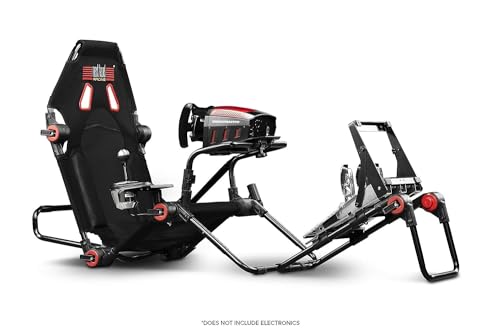
Next Level Racing F-GT Lite Formula and GT Foldable Cockpit
Converts between a reclined formula position and an upright GT position, and still folds. Two very different driving positions from one frame is unusual at this price.
Best for: Drivers splitting time between open wheel and GT cars.
Check price
Next Level Racing GTRacer 2.0 Simulator Cockpit
A permanent steel frame with a proper seat and adjustable pedal plate. This is where a rig stops moving under braking and starts feeling like a car.
Best for: A dedicated corner of a room where the rig can live full time.
Check price
Playseat Trophy Logitech G Edition Sim Racing Cockpit
Rated for direct drive loads with a rigid wheel deck and a fully adjustable seat, so a high torque base does not twist the frame under load.
Best for: Drivers running 8 Nm or more who need a frame that will not flex.
Check price
Next Level Racing GTTrack Simulator Cockpit
A heavy steel frame with a fibreglass-style racing seat and integrated shifter and handbrake mounts. It is not going anywhere, which is exactly the point at high torque.
Best for: Permanent installations with a direct drive base and a load cell brake.
Check priceSim-Lab, Trak Racer and GT Omega aluminium profile rigs
Extruded aluminium profile rigs are effectively infinitely adjustable and effectively rigid at any torque, but they are bought direct or through specialist retailers rather than a marketplace.
Best for: Builders who want a rig they will modify for the next ten years.
Find on Amazon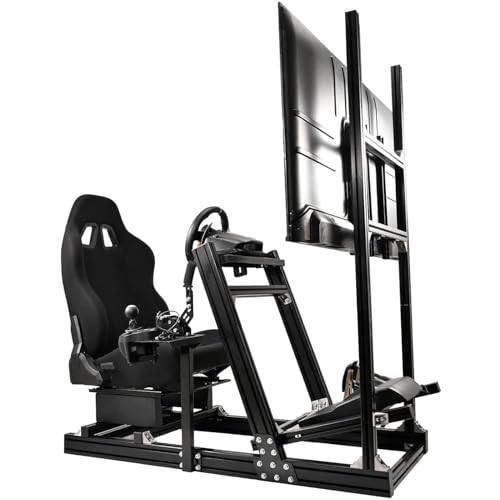
Marada Aluminum 8040 Profile Racing Simulator Cockpit with Monitor Stand
8040 extruded aluminium profile with a bolted monitor stand included, so the screens move with the seat rather than sitting on a separate desk. Profile is the only frame material that stays stiff at 20 Nm and stays adjustable for a decade.
Best for: Permanent rigs running a high torque base and triple screens on one structure.
Check pricePrices change often, confirm on Amazon. As an Amazon Associate we earn from qualifying purchases.
Every cockpit compared on footprint, frame and torque
Footprints are approximate planning figures in inches, taken from published dimensions and owner measurements, and they exclude the space you need behind the frame to get in and out. Torque figures describe the band each frame belongs in rather than a manufacturer warranty.
| Cockpit | Frame | Footprint in use | Stored | Torque it suits | Price |
|---|---|---|---|---|---|
| Next Level Racing GTLite | Folding steel tube, fabric seat | About 45 x 22 in | About 6 in deep | Gear, belt, up to about 5 Nm | $253.26 |
| Playseat Challenge | Folding tubular steel, fabric seat | About 50 x 22 in | About 8 in deep | Gear, belt, up to about 5 Nm | $229.00 |
| Next Level Racing F-GT Lite | Folding steel tube, fabric seat | About 50 x 24 in | About 8 in deep | Up to about 8 Nm | $299.99 |
| Next Level Racing GTRacer 2.0 | Fixed steel tube, moulded seat | About 60 x 24 in | Does not fold | 8 to 12 Nm | $499.99 |
| Playseat Trophy Logitech G Edition | Fixed steel, rigid wheel deck | About 60 x 24 in | Does not fold | 8 to 12 Nm | $599.00 |
| Next Level Racing GTTrack | Heavy steel, fibreglass style seat | About 65 x 30 in | Does not fold | 12 Nm and above | $789.99 |
| Marada 8040 aluminium profile | Extruded 8040 profile, monitor stand included | About 65 to 75 x 26 to 30 in | Does not fold | 20 Nm and above | $595.69 |
| Sim-Lab, Trak Racer, GT Omega profile | Extruded aluminium profile | About 60 to 80 x 24 to 32 in | Does not fold | 20 Nm and above | Varies |
The pattern in that table is the one that decides the purchase. Price tracks rigidity almost perfectly, footprint tracks rigidity closely, and storability runs directly against both. There is no frame here that is rigid at 12 Nm and folds to six inches, and there is not one on the market either, because the geometry that makes a frame fold is the geometry that lets it twist. Choose which two of the three you need. To check the numbers against your own room before ordering, use the rig space calculator and read how much space do you need.
Folding or fixed?
The honest test is not how much space you have, it is how often the rig has to move. A frame that folds in 30 seconds and stores flat gets used. A frame that takes ten minutes to break down gets left up until somebody complains, then gets sold. If your rig lives in a shared living room, a bedroom you also sleep in, or anywhere a partner or a housemate has a say, the folding frames are not a compromise. They are the only category that survives contact with the household.
The GTLite at $253.26 folds smallest and is the default recommendation. The Playseat Challenge at $229.00 costs less and puts you in a more relaxed, feet forward position that suits GT and rally cars far better than open wheel racing. The Next Level Racing F-GT Lite at $299.99 converts between a reclined formula position and an upright GT position and still folds, which is unusual at the price and worth the extra if you split time between disciplines.
Fixed frames win on everything except space. The Next Level Racing GTRacer 2.0 at $499.99 is the point where a rig stops moving under braking and starts feeling like a car, and it is the frame the intermediate build on this site is designed around. The Playseat Trophy Logitech G Edition at $599.00 is built specifically around a rigid wheel deck for direct drive loads. The Next Level Racing GTTrack at $789.99 adds mass, a fibreglass style seat and integrated shifter and handbrake mounts, and it is not going anywhere, which is exactly the point at high torque. The trade offs are compared side by side in folding cockpit versus fixed cockpit.
When does aluminium profile make sense?
Extruded aluminium profile, the 8020 style square section with T slots down every face, is where serious rigs end up. The Sim-Lab, Trak Racer and GT Omega profile rigs are effectively infinitely adjustable, because anything can be bolted anywhere along a slot, and effectively rigid at any torque a consumer base produces. If you expect to add a second base, a button box, a shifter, a handbrake, triple monitors and bass shakers over several years, profile is the frame that absorbs all of it without a single new bracket being unavailable.
The costs are real and worth stating plainly. Profile rigs are bought direct or from specialist retailers rather than a marketplace, so delivery is slower and returns are harder. They arrive as a box of extrusion and fasteners, so the build is measured in hours. And the total is rarely cheaper than a steel cockpit once the seat, the wheel deck, the pedal plate and the monitor mount are counted separately. Buy profile because you want a platform, not because you want a bargain.
The exception to the direct sale rule is worth knowing about, because it changes the price of entry. The Marada 8040 aluminium profile cockpit at $595.69 is sold through the marketplace and includes a bolted monitor stand, which matters more than it sounds: screens fixed to the same structure as the seat cannot drift out of alignment with your eyes, and it removes a separate stand from the budget. At $595.69 it sits between the Next Level Racing GTRacer 2.0 at $499.99 and the GTTrack at $789.99 on price while being stiffer than either and adjustable in a way neither is. It is the frame the expert build is assembled around.
What about the seat inside the cockpit?
Every frame here includes a seat, and the difference between them matters more than buyers expect. A fabric sling seat is comfortable, light and cheap, and it flexes. That flex is fine at low torque and becomes a problem in two places: long stints, where an unsupported lower back fails before your concentration does, and tactile feedback, where a soft seat absorbs the output of a bass shaker instead of transmitting it.
The cheapest fix for the first problem is a Sparco lumbar cushion at $39.79, which costs a fraction of a new seat and solves the most common complaint in the hobby. The fix for the second is a rigid shell such as the Next Level Racing Elite ES3 fibreglass seat at $599.99, which transmits frame vibration and shaker output directly rather than damping it in foam. If you are pairing a seat to a frame, check the mounting first: a Sparco R100 reclining sport seat at $354.46 is a genuine motorsport seat and needs side mounts your rig may not accept. The full ranking is on the best racing seat page, and the geometry to aim for is in sim racing seating position.
What gets bolted to the frame afterwards?
Plan the additions before you choose the frame, because retrofitting is where the annoyance lives. A monitor mount is the big one: a MOUNTUP triple monitor stand at $66.48 is a desk mount, so a rig with no desk needs either a rig mounted monitor arm or a fixed frame that offers one. A shifter needs a side mount, which the GTTrack at $789.99 integrates and most folding frames do not. A ButtKicker Mini LFE at $112.20 needs a rigid mounting point and enough mass around it to work against, which rules out fabric seats.
Two cheap additions apply to every rig. A Next Level Racing Premium XL floor mat at $89.85 spreads the load so a frame does not settle unevenly into carpet pile and begin to rock, and it saves a hard floor from being marked. A TP-Link powered USB 3.0 hub at $23.47 keeps a base, pedals, shifter, handbrake and button box from browning out on a shared header. Neither is exciting and both prevent a recurring problem.
Where to go next
If your frame is settled, the next decision is what to bolt into it. The direct drive wheelbase roundup ranks bases by the torque each frame can hold, and the best sim racing pedals page explains why a pressure based brake is the upgrade most closely tied to consistency once the pedals stop moving. If you are building the whole rig from nothing, the intermediate sim racing setup is designed around a fixed steel frame and lists every line with a price.
Safety note: sim cockpits are heavy, and the heaviest here is a two person lift. Assemble on the floor rather than on a table, follow the manufacturer's fastener and torque figures rather than substituting hardware store bolts for structural ones, and re-check every bolt after the first few sessions once the frame has settled. Bass shakers add continuous vibration that works fasteners loose over months, so a periodic check is worth the two minutes.
Frequently asked questions
Do I actually need a cockpit, or will a wheel stand do?
A wheel stand is enough up to about 5 Nm and for any gear or belt driven wheel, and the Next Level Racing Wheel Stand Lite 2.0 at $179.00 costs less than every cockpit here. A cockpit becomes necessary when the seat needs to be fixed relative to the pedals. Once the brake is a load cell or the base is 8 Nm or more, the reaction force has to be carried by the same structure you are sitting in, or your reference point moves every lap.
Which cockpit works in a small room or an apartment?
The Next Level Racing GTLite at $253.26, because it folds to roughly six inches deep and stores against a wall. It is the single best answer to the small room problem, and it holds gear driven and belt wheels without visible flex. The Playseat Challenge at $229.00 folds similarly and costs less, with a more relaxed seating position that suits GT and rally cars better than open wheel.
What torque can a folding cockpit really hold?
Around 5 Nm comfortably and about 8 Nm at its limit, depending on the model and the floor under it. Above that the failure mode is not collapse, it is flex: the frame twists a few millimetres under a kerb strike and absorbs exactly the transient you bought the base to feel. If you are running a 9 Nm MOZA R9 V3 at $299.99 or more, buy a fixed frame such as the Next Level Racing GTRacer 2.0 at $499.99.
Does a cockpit come with a seat?
Every cockpit on this page includes one. The cheaper folding frames use a fabric sling, which is comfortable but flexes and does not transmit vibration well. The Next Level Racing GTRacer 2.0 at $499.99 and above include moulded or bucket seats on sliders. If you want a rigid shell for bass shakers later, budget a separate seat such as the Next Level Racing Elite ES3 at $599.99 and check the rig accepts side mounts.
Aluminium profile or a steel cockpit?
Steel if you want a finished product, profile if you want a platform. Extruded aluminium profile is effectively infinitely adjustable and effectively rigid at any torque, which is why serious rigs converge on it. The costs are real: it is bought direct or through specialists rather than a marketplace, it arrives as parts, and a full build takes hours rather than the 45 to 120 minutes a steel cockpit needs.
How much floor space should I plan for?
Plan for about 60 by 24 inches for a fixed cockpit, plus roughly 12 inches behind it to get in and out, and more if a monitor stand bolts to the front. Folding frames occupy about 45 to 50 inches deep in use and store at about six to eight inches. Measure before ordering, because a rig that does not fit its room gets sold at a loss far more often than it gets returned.
How we choose: we compare published manufacturer specifications, documented torque and travel figures, and verified owner reviews. We do not test gear in person. Everything here is researched guidance, not professional installation advice. Direct drive wheelbases produce enough torque to injure a wrist, and rig hardware carries real weight, so follow the manufacturer's mounting and torque limits.