Best Sim Racing Accessories: Improvement Per Dollar
The best value sim racing accessory is the TP-Link powered USB 3.0 hub at $23.47, because a rig with a base, pedals, shifter and button box runs out of ports and browns out. For driving feel, a $17.98 Dayton Audio puck shaker or a $112.20 ButtKicker Mini LFE adds a second channel of information through the frame.
Accessories are where a rig stops being a collection of parts and starts being finished, and the ranking that matters is improvement per dollar rather than price. The most transformative single item here is the ButtKicker Mini LFE at $112.20, which turns engine load, kerb strikes and wheel lock into sensations you feel through the frame rather than only through your hands. The best value item is a $23.47 powered USB hub, which is unglamorous and fixes a problem that ends sessions. Everything on this page is small, and two of them will change more about your driving than the next wheelbase up would.
Which accessory gives the most improvement per dollar?
Ranked honestly, the order is not the order of the prices. The TP-Link powered USB 3.0 hub at $23.47 comes first, because it is the cheapest fix for the failure that wastes the most time. The Dayton Audio TT25-8 puck shaker at $17.98 comes second, because for under twenty dollars per channel it adds an entire sense that the rig did not previously have. The Sparco lumbar cushion at $39.79 comes third, because a stint that ends when your back gives up is a stint you did not finish.
After those three the ranking depends on what your rig already is. A driver on triples needs the MOUNTUP triple monitor stand at $66.48 before anything else, because unangled side panels defeat the entire purpose of the second and third screen. A driver on carpet needs the Next Level Racing Premium XL floor mat at $89.85 before the rig starts to rock. An endurance racer needs the PXN CB1 button box at $89.99 and a hotlapper does not.
Every accessory compared by what it fixes
The middle column is the one to read. An accessory is worth buying when it removes a specific annoyance you can name, and worth skipping when it solves a problem your rig does not have. The third column is the part that catches people out: several of these need something else bought or owned alongside them before they work at all.
| Accessory | What it fixes | What it needs alongside it | Price |
|---|---|---|---|
| Dayton Audio TT25-8 puck shaker | A rig that tells you nothing through the seat | A small amplifier and a bolt point | $17.98 |
| TP-Link powered USB 3.0 hub | Devices dropping out mid session | A mains socket near the rig | $23.47 |
| Sparco lumbar cushion | A lower back that fails before your focus does | Nothing | $39.79 |
| MOUNTUP triple monitor stand | Side panels that cannot be angled inward | A desk, and panels within the weight rating | $66.48 |
| Thrustmaster quick release adapter | A four bolt job every time you change rim | A Thrustmaster T818 base | $69.99 |
| MOZA 12 inch round wheel mod | A formula rim on a car with 900 degrees of lock | A MOZA ES or ESX wheel | $75.99 |
| Next Level Racing Premium XL floor mat | A frame settling into carpet and rocking | Floor space the size of the rig | $89.85 |
| PXN CB1 button box, 19 controls | Reaching for a keyboard mid stint | A PC and a rig mount or desk space | $89.99 |
| ButtKicker Mini LFE | Engine load and surface arriving as one buzz | Its own amplifier and a rigid frame | $112.20 |
| Fosi Audio TB10D 2 channel amplifier | A transducer with nothing driving it | A spare audio output from the PC | $79.99 |
| Dayton Audio BST-300EX transducer | Front and rear tactile arriving on one channel | A real amplifier and a profile or steel frame | $93.49 |
| Dayton Audio BSA-200 shaker amplifier | Speaker amps passing content the shaker cannot use | One or two transducers to drive | $319.98 |
Two entries in that third column are hard requirements rather than suggestions. Both tactile transducers need an amplifier, which is a separate purchase and typically costs more than the $17.98 puck shaker itself. And both rim related items are ecosystem locked: the quick release fits a Thrustmaster T818, the round rim fits MOZA ES and ESX wheels, and neither crosses brands.
Best sim racing accessories by tier
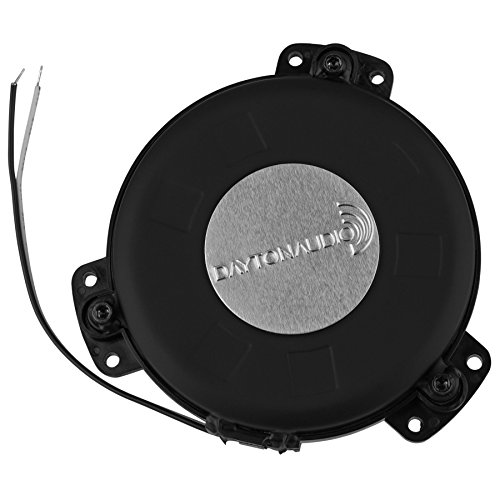
Dayton Audio TT25-8 Puck Tactile Transducer Bass Shaker
Bolted under a seat and fed from a small amplifier, a puck shaker turns kerb strikes and wheel lock into something you feel through the frame. It needs an amplifier, which is the part people forget to budget for.
Best for: A first taste of tactile feedback for under twenty dollars per channel.
Check price
TP-Link Powered USB 3.0 Hub with 7 Data Ports
A rig eats four to six USB ports once a base, pedals, shifter, handbrake and button box are connected. A powered hub is what stops low bandwidth devices from browning out when the base draws current.
Best for: Any rig with more than three USB devices.
Check price
PXN CB1 Sim Racing Button Box for PC, 19 Controls
Nineteen physical controls including toggles and rotaries, which is what lets you change brake bias or traction control without taking a hand off the rim to find a keyboard.
Best for: Endurance and GT racers who adjust the car mid stint.
Check price
MOUNTUP Triple Monitor Stand Mount for Screens up to 27 inch
Triples only work if the side panels can be angled inward to match your seating distance, and a fixed desk stand cannot do that. Check the arm weight rating against your panels before ordering.
Best for: Desk-mounted triple screen arrays up to 27 inches.
Check price
Next Level Racing Premium XL Floor Mat
A rigid mat spreads a rig load over a larger area, which is what stops a frame settling into carpet pile unevenly and starting to rock. It also stops a heavy frame denting a hard floor.
Best for: Rigs on carpet, laminate or any floor you do not want marked.
Check price
Sparco Lumbar Cushion
Sim seats are shaped for a driver wearing a suit and a harness, so an unsupported lower back is the most common complaint in a long stint. A lumbar cushion costs less than a new seat and often fixes it.
Best for: Anyone whose back gives up before their concentration does.
Check price
ButtKicker Mini LFE Tactile Transducer
Far more low frequency output than a puck shaker, enough that engine load and road surface separate into distinct sensations rather than one buzz. Needs its own amplifier and a rigid mounting point.
Best for: Fixed rigs where the frame can carry the mass and transmit the output.
Check price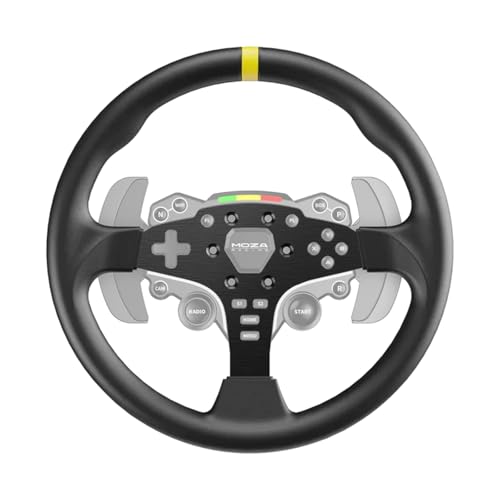
MOZA Racing 12 inch Round Wheel Mod for ES and ESX
A round rim suits cars with more than 360 degrees of lock, where a formula style rim forces you to shuffle your hands. Swapping rims per car class is the main reason to own a quick release base.
Best for: MOZA ES and ESX owners who drive GT, rally and road cars.
Check price
Thrustmaster Quick Release Adapter for T818 Direct Drive Base
Turns a rim change from a four bolt job into a few seconds, which is the difference between owning two rims and actually using two rims. Confirm the adapter matches your exact base before ordering.
Best for: T818 owners running more than one steering wheel rim.
Check price
Fosi Audio TB10D 2 Channel Class D Power Amplifier
A tactile transducer is a speaker with no cone, so it needs an amplifier exactly as a speaker does. This is the cheap two channel answer, and it is the line people forget when they budget a bass shaker.
Best for: Driving one or two puck shakers from a spare audio output.
Check price
Dayton Audio BST-300EX 300 Watt Tactile Bass Shaker
A 300 watt transducer bolted to a rigid frame member puts out enough low frequency energy that engine load, road surface and kerb strike separate into distinct sensations instead of one buzz. It needs a real amplifier, not a spare speaker output.
Best for: Aluminium profile and heavy steel rigs with a dedicated amplifier channel.
Check price
Dayton Audio BSA-200 200 Watt Bridgeable Bass Shaker Amplifier
Built for transducers rather than for speakers, with a level control and a crossover that keeps everything above the tactile band out of the shaker. Bridgeable to one high output channel or split across two corners of a rig.
Best for: Multi channel tactile setups on a permanent rig.
Check pricePrices change often, confirm on Amazon. As an Amazon Associate we earn from qualifying purchases.
What do tactile transducers actually add?
A second channel. Force feedback tells your hands about the front axle, because that is what a steering system physically connects to. It tells you almost nothing about the rear, and the rear is where most spins start. A transducer bolted to the frame or the seat feeds you low frequency information from the whole car: the rear stepping out, one wheel dropping onto a different surface, the moment a tyre locks under braking, the change in engine load as the throttle comes in.
The difference between the two options here is resolution rather than volume. The Dayton Audio TT25-8 puck at $17.98 gives you one broad sensation, which is enough to feel kerbs and lock. The ButtKicker Mini LFE at $112.20 has far more low frequency output and enough separation that engine load and road surface stop being the same signal. Both need their own amplifier, and both need a rigid mounting point: a Next Level Racing GTRacer 2.0 at $499.99 or a fibreglass shell seat at $599.99 transmits the output instead of damping it in foam.
Which amplifier does a tactile transducer need?
A transducer is a voice coil with no cone attached, so it needs an amplifier exactly as a loudspeaker does. This is the line almost every first tactile build forgets, and it is the reason people report that a shaker they bought "does nothing": plugged into a motherboard audio jack, it genuinely does nothing.
Two sensible answers, at opposite ends. The Fosi Audio TB10D at $79.99 is a compact two channel class D amplifier and the cheapest route to a working single or dual shaker setup, which makes the real cost of entry to tactile about $98 rather than $18. The Dayton Audio BSA-200 at $319.98 is built for transducers rather than for speakers, with a level control and a crossover that keeps everything above the tactile band out of the shaker, and it bridges to one high output channel or splits across two corners of a rig.
Once you have a real amplifier, a bigger transducer becomes worth having. The Dayton Audio BST-300EX at $93.49 puts out enough low frequency energy on a rigid frame that engine load, road surface and kerb strike separate into distinct sensations rather than one buzz. Two channels, one under the seat and one under the pedal deck, is what turns tactile from an effect into information: a wheel lock and a kerb strike stop arriving through the same path. That is the arrangement the expert build uses, and it is the last thing on that list to buy rather than the first.
Why does a rig need a powered USB hub?
Because a finished rig is five or six USB devices, and a computer's front panel header was never designed to supply them. A wheelbase draws current in bursts as the motor demands it. Pedals, a shifter, a handbrake and a button box each sit on the same bus, and when the base spikes the low bandwidth devices are what drop out. The symptom is a shifter that stops responding two hours into a race, or pedals that disappear during a pit stop, and it reads like a fault rather than a power problem.
A TP-Link powered USB 3.0 hub with 7 data ports at $23.47 supplies its own current so the devices are not competing. The correct arrangement is to give the wheelbase and the pedals direct motherboard ports and to put everything low bandwidth on the hub. At $23.47 this is the cheapest genuine fix on the site, and it belongs in the same order as the MOZA HBP handbrake at $99.99 or any other device that pushes your port count past four.
What fixes comfort over a long stint?
The specific complaint almost everyone has is lower back, and the specific cause is that sim seats are shaped for a driver wearing a race suit and held by a harness. Without the harness your pelvis rotates and your lumbar curve flattens, and 40 minutes later you are shifting in the seat instead of concentrating. A Sparco lumbar cushion at $39.79 costs a fraction of a new seat and solves that exact problem, which is why it belongs near the top of this list rather than treated as an afterthought.
If the cushion does not fix it, the problem is geometry rather than padding, and the answer is in sim racing seating position rather than in another accessory. Only after both of those should you look at replacing the seat itself, which is ranked in the best racing seat roundup. A Next Level Racing ERS4 with suede centre panels at $299.99 holds you in place better than smooth PU, which matters far more in a two hour stint than in a hotlap.
Which accessories depend on hardware you already own?
Three of them, and this is where returns come from. The Thrustmaster quick release adapter at $69.99 fits the T818 direct drive base and nothing else. The MOZA 12 inch round wheel mod at $75.99 fits MOZA ES and ESX wheels. Rim mounting patterns, quick release standards and pin counts are not interchangeable across manufacturers even when the bolt circle looks similar, so confirm the exact model rather than the brand.
The MOUNTUP triple monitor stand at $66.48 has a different dependency: it is a desk mount, and it carries panels up to 27 inches within a published weight rating. Check the weight of your specific monitors before ordering, because a stand rated below your panels will sag at the arms over weeks rather than fail immediately. The reason side panels must angle inward at all is explained in how to set up triple monitors, and the panels themselves are ranked in the best sim racing monitor roundup. Three Acer Nitro XV271U panels at $169.99 is the standard route to a triple array.
Is a second rim worth buying?
It is the accessory most likely to change how a car feels, and the one most often bought in the wrong order. Rim diameter and shape are not cosmetic: a formula style rim with cut away tops is designed for a car with under 400 degrees of lock, where your hands never leave the ten and two position. Put that rim on a rally car with 900 degrees of lock and you spend the corner shuffling your hands across a shape that has no rim at the top to grab.
A round rim such as the MOZA 12 inch round wheel mod at $75.99 is the correct tool for GT, rally and road cars, and a formula rim is correct for open wheel. Owning both only makes sense if changing between them is quick, which is the entire argument for a quick release adapter at $69.99: without one, a rim change is four bolts and a torque check, and nobody does that between races. With one, it is a few seconds and both rims actually get used.
The order matters. Buy the second rim only after the base, the frame and the pedals are settled, because a rim is a refinement of a control that already works rather than a fix for one that does not. If your base has no quick release and no aftermarket adapter exists for it, treat the rim as a single choice rather than a collection, and pick the shape that matches the cars you drive most.
What order should you buy them in?
Buy the thing that removes a problem you can currently name. If devices drop out, buy the hub. If your back fails, buy the cushion. If the rig rocks, buy the mat. If you have no complaints at all, buy the $17.98 puck shaker and an amplifier, because tactile feedback is the only item here that adds something rather than fixing something.
What none of these do is substitute for the parts underneath them. An accessory improves a rig that already works. If your pedals still slide or your wheel is clamped to a hollow desk top, the money belongs in the cockpit roundup first, and the order for everything else is set out in upgrading your rig in order. For a complete rig with these extras costed in, the intermediate sim racing setup lists them as separate lines with a running total.
Safety note: transducers and amplifiers push real power into a frame, so keep speaker wiring away from moving parts and pinch points, and mount a transducer where it cannot work loose over a seat. Continuous vibration loosens fasteners over months rather than days, so re-check the frame bolts on any rig running tactile feedback.
Frequently asked questions
Which sim racing accessory is the best value?
The TP-Link powered USB 3.0 hub at $23.47, because it fixes a problem that ruins whole sessions. A rig with a base, pedals, a shifter, a handbrake and a button box needs five or six ports, and low bandwidth devices brown out when a wheelbase draws current from a shared header. For pure driving feel, the Dayton Audio TT25-8 puck shaker at $17.98 adds the most sensation per dollar, though it needs an amplifier.
Do bass shakers actually help lap times?
They help awareness more than raw pace. A tactile transducer turns wheel lock, kerb strikes and surface changes into something you feel through the frame, which gives you a second channel of information alongside the wheel. The ButtKicker Mini LFE at $112.20 separates engine load from road surface far better than a puck shaker does. Both need their own amplifier, which is the cost people forget to budget.
Do I need a button box?
Only if you change the car while driving. The PXN CB1 at $89.99 gives 19 physical controls including toggles and rotaries, which lets you adjust brake bias or traction control without taking a hand off the rim to find a keyboard. That is genuinely useful in endurance and league racing and close to pointless for ten minute hotlaps, where nothing changes mid run.
Why does a rig need a floor mat?
To spread the load. A frame on carpet pile settles unevenly over the first few weeks, and once one foot has sunk further than the others the rig rocks slightly under braking. A Next Level Racing Premium XL floor mat at $89.85 spreads that load over a much larger area and stops the settling, and on a hard floor it prevents the frame denting or marking the surface.
Is a quick release adapter worth it?
Only if you own more than one rim. The Thrustmaster quick release adapter at $69.99 turns a rim change from a four bolt job into a few seconds, which is the difference between owning two rims and actually using two rims. Confirm it matches your exact base before ordering, because it is specific to the T818 and adapters are not interchangeable across manufacturers.
What accessory fixes discomfort in a long stint?
A Sparco lumbar cushion at $39.79, more often than a new seat does. Sim seats are shaped for a driver wearing a suit and a harness, and an unsupported lower back is the most common complaint in a two hour stint. It costs a fraction of a $249.99 seat and it solves the specific complaint most people actually have, so try it before replacing anything structural.
How we choose: we compare published manufacturer specifications, documented torque and travel figures, and verified owner reviews. We do not test gear in person. Everything here is researched guidance, not professional installation advice. Direct drive wheelbases produce enough torque to injure a wrist, and rig hardware carries real weight, so follow the manufacturer's mounting and torque limits.